
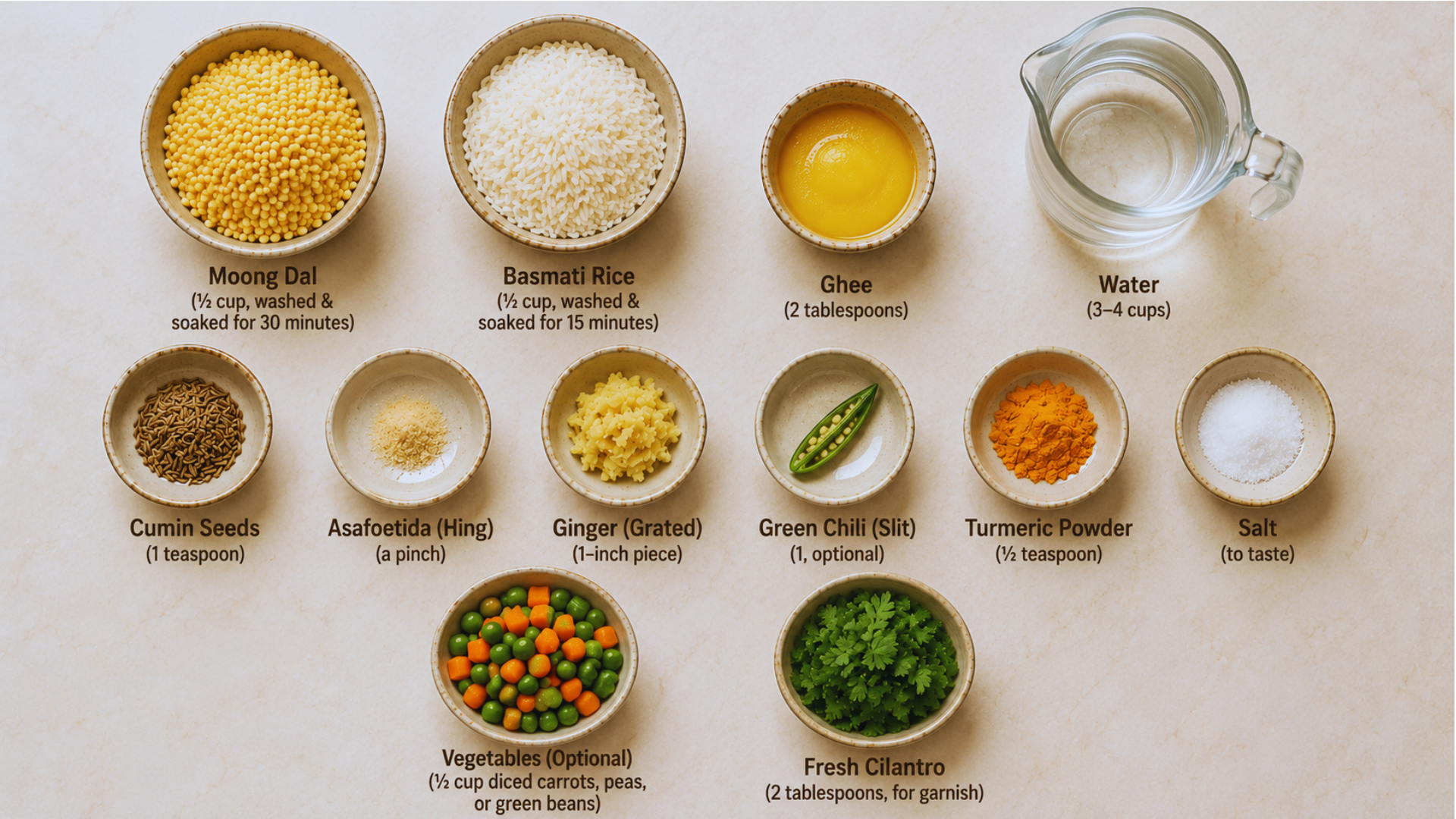
- Soak
Wash moong dal until the water runs clear. Soak in water for 30 minutes. Wash basmati rice properly and soak for 15 minutes. Drain both before cooking.
- Heat the Fat
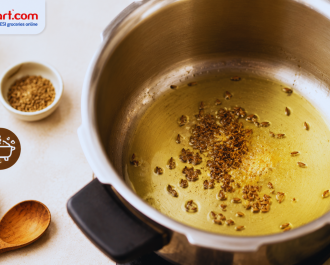
In a pressure cooker or heavy-bottomed pot, heat ghee over medium heat. Add cumin seeds and asafoetida. Let the cumin sputter and turn golden, about 30 seconds.
- Saute Aromatics
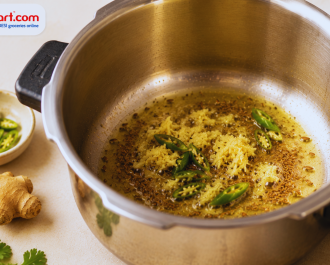
Add grated ginger and green chili. Sauté for 1 minute until fragrant.
- Add Vegetables (if using)
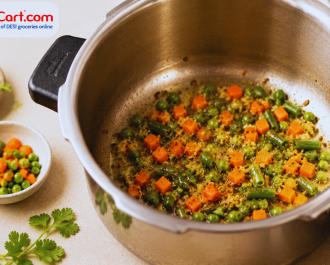
Add diced vegetables and sauté for 2 minutes until slightly softened.
- Add Dal, Rice, and Spices
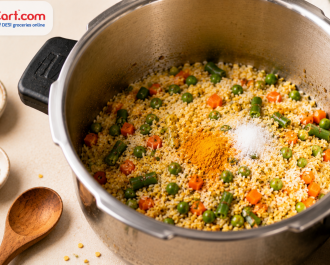
Add drained moong dal and rice. Stir in turmeric and salt. Mix everything together.
- Add Water and Cook
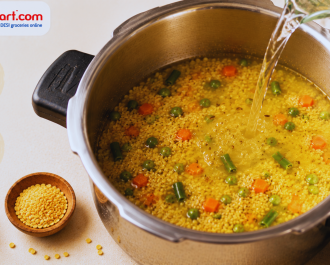
Pour in 3 to 4 cups of water. For a pressure cooker, seal and cook for 2 to 3 whistles on medium heat. If using a regular pot, then cook it 15-20 minutes on low heat.
- Adjust Consistency
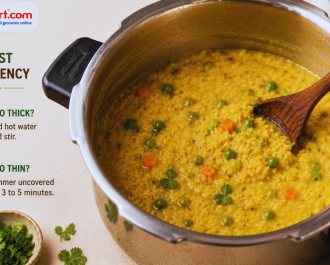
After cooking, if it is too thick, add hot water and stir. If it is too thin, simmer uncovered for 3 to 5 minutes.
- Garnish and Serve
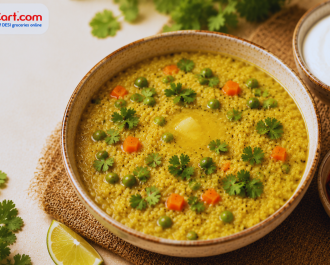
Serve hot with a spoonful of ghee on top, plain yogurt on the side, and lime pickle. Finish with fresh cilantro.
The khichdi will continue thickening slightly as it rests. Add hot water before serving if you prefer a softer consistency.
- Calories:240 kcal
- Total Fat:7 gm9%
- Carbohydrates:35 gm13%
- Dietary Fiber:6 gm21%
- Protein:10 gm20%
- Iron:2.8 mg16%
- Folate:120 mcg30%
- Magnesium:55 mg13%
Why Khichdi is the Ultimate Comfort Food
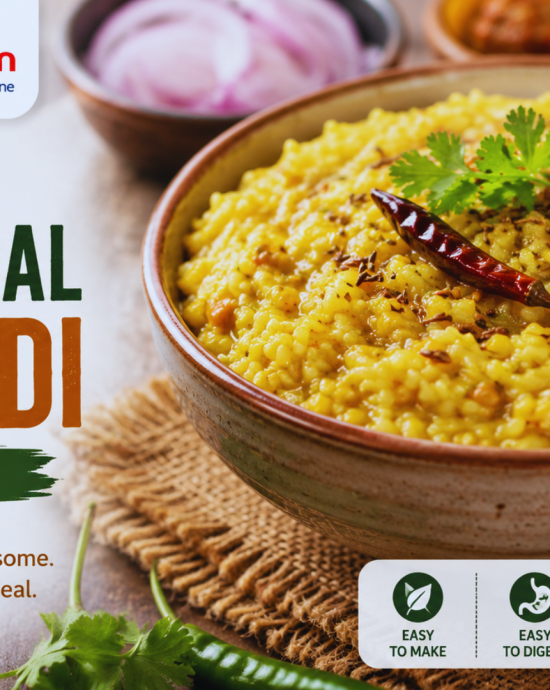
This traditional moong dal khichdi recipe has been enjoyed across the Indian subcontinent for centuries. Khichdi appears in Indian culinary texts as early as the 14th century (Ibn Battuta’s Rihla, 1340 AD, mentions it as a staple in the Indian subcontinent). Today, rice and lentils are widely recognized as a complementary plant-based protein combination because together they provide a broader amino acid profile than either ingredient alone. It is easy to digest, so it works well for children, the elderly, people recovering from illness, and anyone looking for a light yet filling meal.
Cooking Tips
Soak the dal. Even 30 minutes of soaking significantly reduces cooking time and improves digestibility by reducing phytic acid content (Kumar et al., 2010, Food Chemistry).
Use ghee instead of oil. Ghee gives a nutty, rich flavor that is hard to match with vegetable oil. You only need a little, and it fits well in a balanced diet. For a vegan option, coconut oil works best.
Adjust water for texture. For babies or people recovering from illness, use 4 to 5 cups of water for a soft, soupy porridge. For a regular adult meal, 3 cups will give a firmer, risotto-like texture.
The thing is not optional for sensitive stomachs. Asafoetida has well-documented carminative properties — it significantly reduces gas caused by legumes (ICMR Nutritive Value of Indian Foods, 2017). Even a small pinch makes a notable difference for digestive comfort.
Health Benefits
Moong dal (mung beans) are some of the easiest legumes to digest. They contain iron, folate, and potassium, and are low in fat. According to ICMR’s Nutritive Value of Indian Foods (2017 edition), 100g of cooked moong dal gives 24g of protein and plenty of B vitamins. When you combine rice and lentils, you get a complete amino acid profile. Because rice and lentils complement one another nutritionally, khichdi is often considered a balanced plant-based meal option for vegetarian households.
Variations That You Need to Prepare Moong Dal Khichdi.
Masala Khichdi: Add a small amount of diced tomatoes, onions, and additional spices for a richer flavor.
Sabudana Khichdi: A popular fasting variation using tapioca pearls instead of rice, cooked with peanuts, cumin, and green chili.
Vegetable Khichdi: Add as many diced vegetables as you like. This dish is very flexible and easy to adapt to dietary needs.
Oats Khichdi: For a modern health-forward variation, replace rice with rolled oats for added soluble fiber.
Different regions across India and Bangladesh prepare khichdi differently depending on climate, season, and local ingredients, which is why there are many texture and flavor variations of this dish.
| ⭐ The SubziCart AdvantageSubziCart.com stocks premium small-grade yellow moong dal — naturally split and hulled without chemical treatment — sourced from Rajasthan and Madhya Pradesh farms.Our aged basmati rice provides the elongated grain and non-sticky texture that makes khichdi feel restaurant-quality rather than mushy.We carry high-quality A2 ghee from grass-fed desi cows — widely considered the gold standard for traditional Indian cooking and the best pairing for khichdi.All products ship fresh with documented sourcing information. No artificial additives, no blending with inferior grades. |
Storage Tips
You can keep the leftover khichdi in an airtight box in the refrigerator for up to 3 days. When eating, reheat with a splash of hot water, as the rice and lentils naturally thicken as they cool.
Frequently Asked Questions
Q1:Can I make moong dal khichdi without a pressure cooker?
Yes. A heavy-bottomed pot works well, although cooking time may increase slightly depending on the rice and dal used.
Q2:Is khichdi good for digestion?
Many South Asian households consider moong dal khichdi easier to digest than heavily spiced curries because it uses mild seasoning and soft-cooked lentils.
Q3:Can I freeze khichdi?
Yes. Store cooled khichdi in freezer-safe containers for up to 1 month. Reheat with additional water for the best texture.
Q4:Which rice works best for khichdi?
Basmati rice is commonly used because of its aroma and soft texture, although short-grain rice also works well.