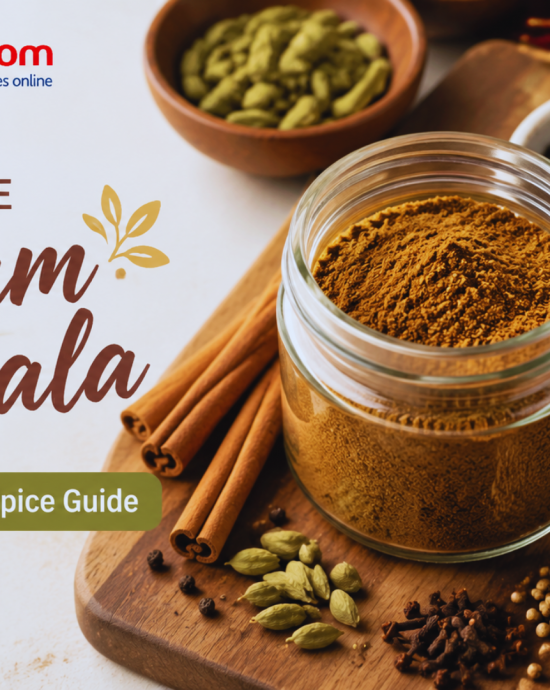

- Gather and Measure
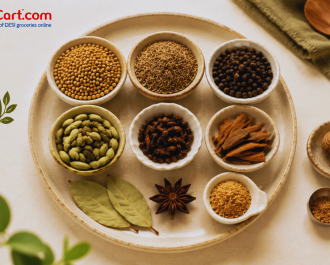
Accurately measure all whole spices. Set aside the nutmeg — it will be added after roasting.
- Dry Roast
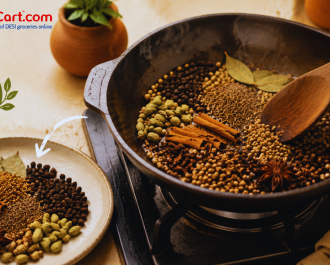
Heat a heavy-bottomed pan or iron skillet over medium-low heat. Add all whole spices except nutmeg. Roast, stirring constantly, for 5 to 7 minutes until they smell warm and deep, and look slightly darker. The aroma should be rich, not sharp or burnt. As soon as they're ready, transfer them to a plate to cool.
- Cool Completely
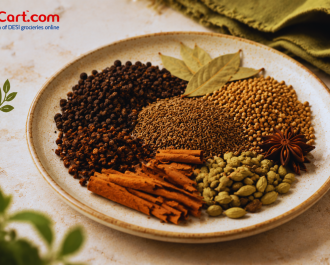
This is critical. Allow spices to cool to room temperature before grinding. Warm spices release their oils prematurely in the grinder, resulting in a clumped, less potent powder.
- Grind
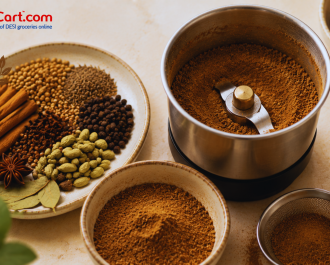
Transfer cooled spices to a spice grinder or high-speed blender. Add grated nutmeg if using. Grind to a fine, uniform powder. Sift through a fine mesh if you prefer extra-smooth texture and re-grind any coarse pieces.
- Store
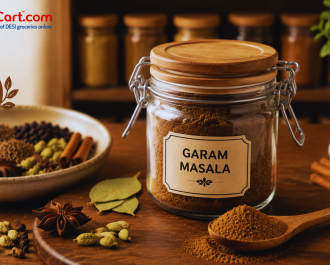
Transfer immediately to an airtight glass jar. Label with the date. Store in a cool, dark cupboard away from the stove.
- Calories:6 kcal<1%
- Total Fat:0.3 gm<1%
- Carbohydrates:1.2 gm<1%
- Dietary Fiber:0.6 gm2%
- Protein:0.2 gm<1%
- Sodium:2 mg<1%
- Iron:0.3 mg2%
- Calcium:18 mg1%
- Potassium:42 mg1%
| ✍ About the Author: Reviewed & written by the SubziCart.com Editorial Team. Our team includes food writers, nutritionists, and South Asian culinary experts with decades of combined experience in traditional Indian and Bangladeshi cooking. All recipes are tested in home kitchens and reviewed for nutritional accuracy using USDA and ICMR (Indian Council of Medical Research) data. |
Roasting Tips — Why They Matter
Dry roasting whole spices is more than just a step in the process. It is a chemical change that makes homemade garam masala much better than store-bought blends. Heat initiates the Maillard reaction in spices and releases their essential oils, which add depth and help the flavors blend into dishes (Davidson, 2014, The Oxford Companion to Food). Always roast on medium-low heat. Cooking at very high heat may overcook or scorch the outer layer while the inside remains undercooked.
Make small batches. The ½-cup amount in this recipe is on purpose. It’s best to make a fresh batch every 6 to 8 weeks rather than a large batch that will lose its flavor. Freshness is key, so there is no reason to make enough for a whole year.
Essential Indian Spice Reference Guide
All spices below are available at SubziCart.com in whole and ground forms.
| Spice | Flavor & Notes | Best Used In |
| Turmeric (Haldi) | Earthy, slightly bitter, vivid yellow. Contains curcumin — a powerful anti-inflammatory compound. | Curries, dals, rice dishes, health drinks, marinades |
| Red Chili Powder (Lal Mirch) | Pungent heat with bright red color. Intensity varies by variety — Kashmiri gives color, Cayenne gives heat. | Curries, marinades, tempering, pickles |
| Coriander Powder (Dhaniya) | Mild, citrusy, earthy. The backbone of most Indian curry masalas. | Curries, dals, spice blends, dry rubs |
| Cumin Seeds (Jeera) | Warm, nutty, earthy when toasted. One of the most widely used tempering spices. | Tadka (tempering), rice dishes, raitas, dals |
| Mustard Seeds (Rai) | Nutty, pungent when popped in hot oil. Black most pungent; yellow mildest. | South Indian cooking, pickles, tempering |
| Asafoetida (Hing) | Sharp, onion-garlic aroma when raw; mellows to savory depth when cooked. Known digestive aid. | Dals, vegetables, Jain / vegan cooking |
| Cardamom (Elaichi) | Green: sweet, floral, perfumed. Black: smoky, camphor-like. Two very different spices. | Biryanis, desserts, chai, garam masala |
| Cloves (Laung) | Intense, pungent, warming. Use sparingly — a little goes a long way. | Biryani, garam masala, spiced teas |
| Cinnamon (Dalchini) | Sweet, woody, warm. True cinnamon (Ceylon) is milder than cassia — both used in Indian cooking. | Curries, biryanis, desserts, masala chai |
| Kasuri Methi | Dried fenugreek leaves. Bitter-sweet, distinctly aromatic. The secret ingredient in Butter Chicken. | Butter Chicken, paneer dishes, flatbreads |
Spice Storage Best Practices
Store all spices- whole or ground- in an airtight glass jar and keep it away from direct sunlight and heat sources. The area above the stove is the worst possible location for spice storage, despite being convenient — the heat and steam from cooking rapidly degrade volatile flavor compounds. A cool, dark drawer or cupboard is ideal.
Whole spices stay fresh for 1 to 2 years. For the best flavor, replace ground spices every 3 to 6 months. The easiest way to check: if a spice has no smell when you rub a pinch between your fingers, it’s time to replace it.
Health Benefits of Indian Spices
Indian spices are more than just ingredients for cooking. They are also functional foods with proven health benefits. Curcumin in turmeric has been studied in over 12,000 peer-reviewed papers for its anti-inflammatory and antioxidant effects (Prasad & Aggarwal, 2011, Spices). Black pepper contains a compound called piperine that can significantly increase the body’s absorption of curcumin by up to 2,000%. This is why turmeric and black pepper are often used together in Indian recipes (Shoba et al., 1998, Planta Medica). Cardamom has also been shown to help lower blood pressure (Verma et al., 2009, Indian Journal of Biochemistry & Biophysics).
| ⭐ The SubziCart Advantage: SubziCart.com sources whole spices directly from producing regions: cumin from Rajasthan, cardamom from Kerala, cinnamon from Sri Lanka (Ceylon variety), and coriander seeds from Madhya Pradesh.Our spices are packaged in nitrogen-flushed, sealed bags to prevent oxidation during transit — preserving essential oils that pre-retail handling often destroys.We offer ‘Garam Masala Kit’ bundles containing all 9 whole spices in one order — perfect for this exact recipe.All SubziCart.com spice products are USDA-compliant, tested for contaminants, and clearly labeled with origin and packaging date. |
Frequently Asked Questions — Garam Masala & Spices
How often should I make fresh Garam Masala?
For the best flavor, make a fresh batch every 6 to 8 weeks. This recipe makes about ½ cup, which is just right for a family that cooks Indian food three or four times a week. Freshly made garam masala smells much stronger than any blend that has been sitting in a jar for more than six months.
Difference between Garam Masala and Curry Powder?
They have different uses. Garam Masala is a warm, aromatic blend (with cinnamon, cardamom, cloves, and black pepper) that you add near the end of cooking to finish a dish. Curry powder is a more general blend (with turmeric, chili, coriander, and cumin) used at the start of cooking. You can’t swap one for the other.
Can I use pre-ground spices for this recipe?
You can use pre-ground spices, but they usually have a milder and less intense flavor. The dry roasting step in this recipe is meant for whole spices because the heat brings out their essential oils and flavors. Pre-ground spices have already lost many of these important compounds before you even open the package.
Are all these spices available year-round at SubziCart.com?
Yes. All the whole spices in Yes. All the whole spices listed in this guide are available year-round at SubziCart.com. Some specialty items, such as black cardamom, mace, and kalpasi (stone flower), might only be in stock during certain seasons, so check the website for the latest updates.